Orbits
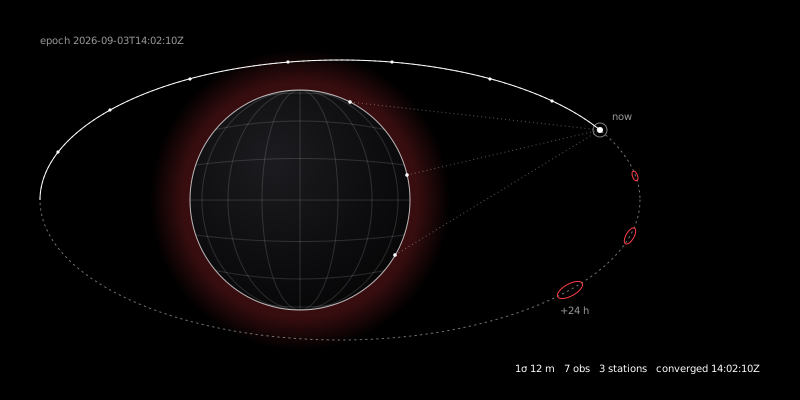
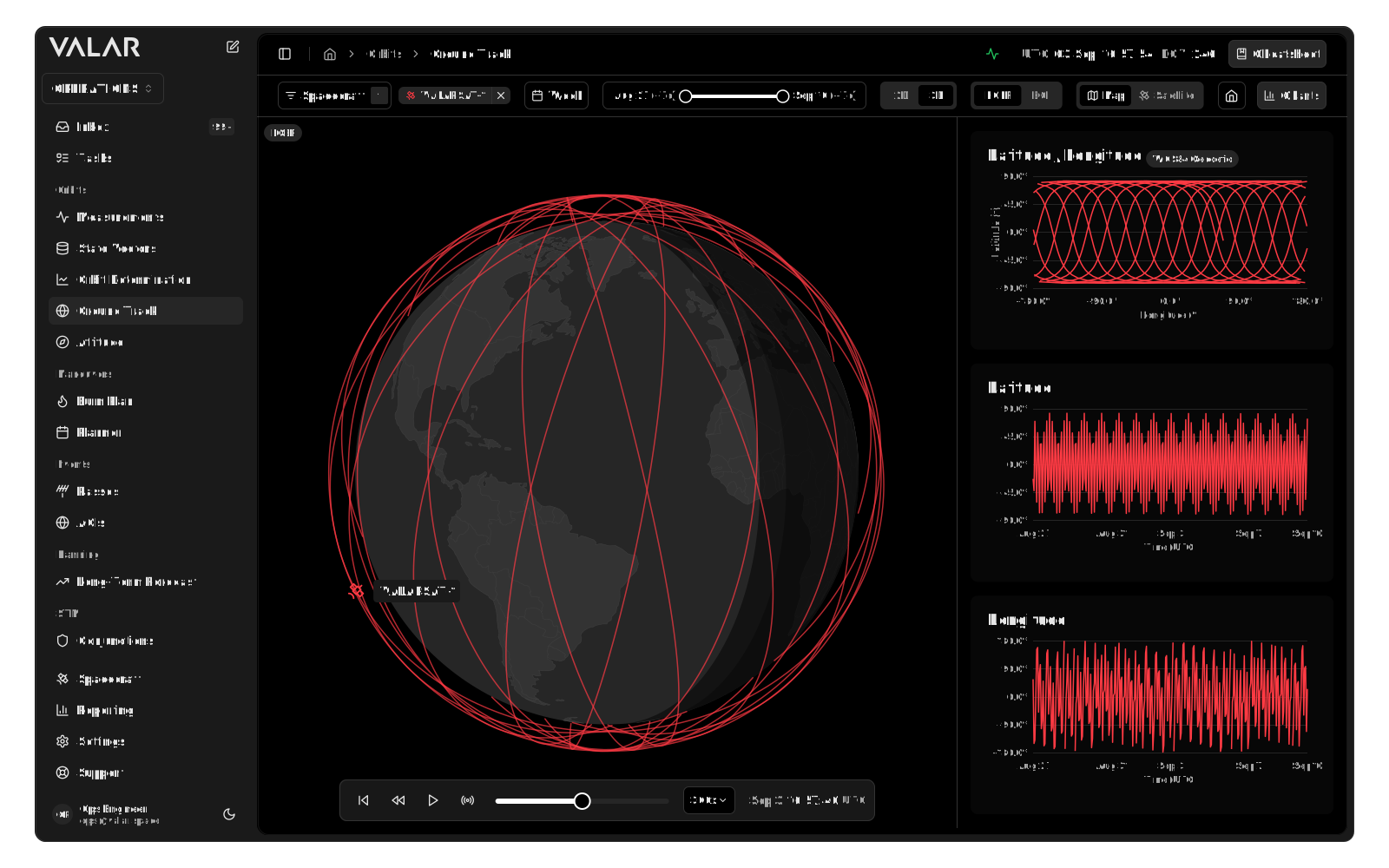
Turn tracking measurements into orbit solutions. Inspect uncertainty, residuals, and maneuver reconstruction, then predict and deliver ephemerides with the orbit's source and age in view.
Explore OrbitsConnect orbit determination, maneuver planning, and conjunction assessment with the daily work of contacts, area access, and attitude. Review the evidence and carry decisions into your ground segment.
Our Clients
From first missions to established fleets.











Build orbital knowledge, plan changes, and assess encounters. Use the same spacecraft context to predict ground contacts, find area-access opportunities, and prepare attitude products.
Shared spacecraft configuration and the Map connect the work. Automation handles configured tasks, while integrations carry data and products between VALAR and your mission systems.
Turn tracking measurements into orbit solutions. Inspect uncertainty, residuals, and maneuver reconstruction, then predict and deliver ephemerides with the orbit's source and age in view.
Define attitude modes and transitions, inspect spacecraft orientation, and generate attitude ephemerides. Connect pointing needs to maneuver, contact, and observation activities.
Set an orbital objective, compare candidate plans, and review the fuel and timing tradeoffs. Approve individual burns and prepare products for your ground-segment handover.
Follow encounters as alerts evolve, recompute assessments with your orbital data, and compare avoidance options. Carry a selected response into the shared maneuver workflow.
Define ground stations and inspect usable contact windows. Define areas of interest and evaluate overflight opportunities using payload geometry, pointing, and observing conditions. Save planned contacts and observations for operational review.
Configure orbit-determination, alert-fetching, and ephemeris-push tasks. Review runs and delivery history, and exchange supported data with your mission systems through file workflows and APIs.
Everything public about VALAR is published in machine-readable form at predictable URLs, so agents and scripts never have to scrape pages:
Responses carry IETF RateLimit-Policy and RateLimit headers so callers can self-throttle; API errors are RFC 9457 problem details carrying a stable code, a human-readable detail, and an actionable resolution hint.
Valar is built by VALAR SPACE, S.L., registered office Calle Maria de Molina 39, 8th floor, 28006 Madrid, Spain. Contact: legal@valar.space or +34 650 860 938.
Features
Build orbital knowledge, plan changes, and assess encounters. Use the same spacecraft context to predict ground contacts, find area-access opportunities, and prepare attitude products.
Turn tracking measurements into orbit solutions. Inspect uncertainty, residuals, and maneuver reconstruction, then predict and deliver ephemerides with the orbit's source and age in view.
Explore Orbits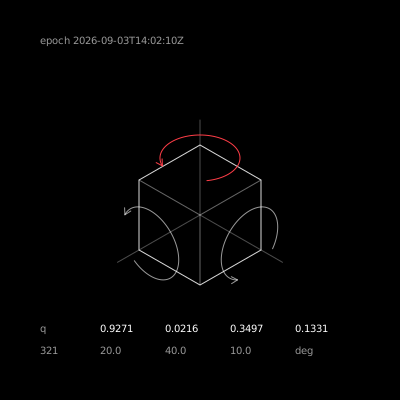
Define attitude modes and transitions, inspect spacecraft orientation, and generate attitude ephemerides. Connect pointing needs to maneuver, contact, and observation activities.
Read about attitude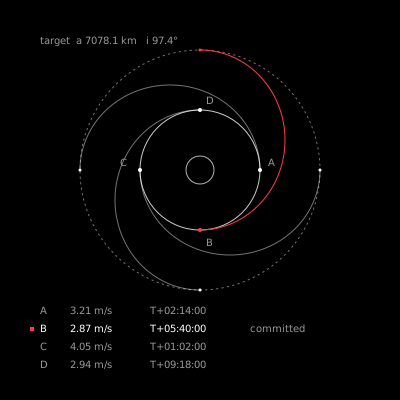
Set an orbital objective, compare candidate plans, and review the fuel and timing tradeoffs. Approve individual burns and prepare products for your ground-segment handover.
Explore Maneuvers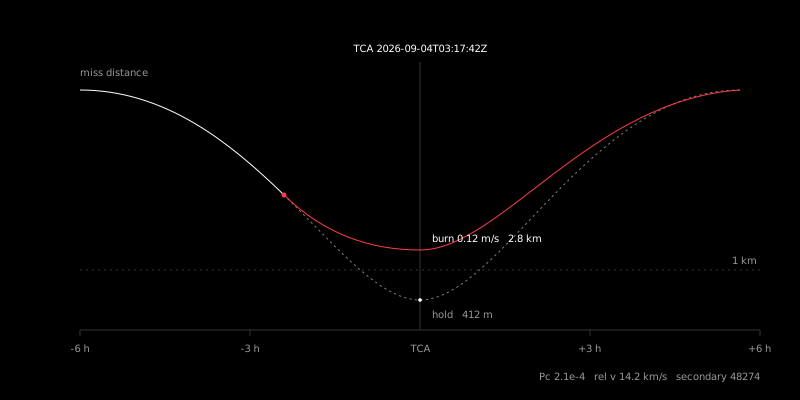
Follow encounters as alerts evolve, recompute assessments with your orbital data, and compare avoidance options. Carry a selected response into the shared maneuver workflow.
Explore Conjunctions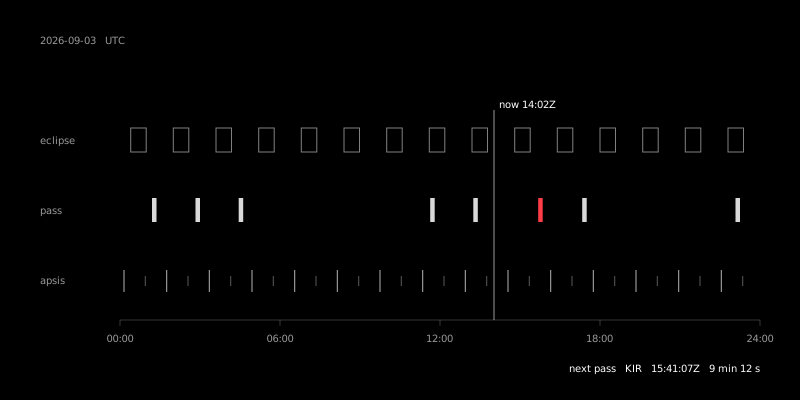
Define ground stations and inspect usable contact windows. Define areas of interest and evaluate overflight opportunities using payload geometry, pointing, and observing conditions. Save planned contacts and observations for operational review.
Explore contacts and area-access documentation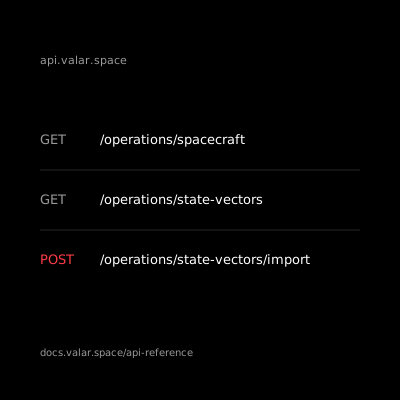
Configure orbit-determination, alert-fetching, and ephemeris-push tasks. Review runs and delivery history, and exchange supported data with your mission systems through file workflows and APIs.
Read about automationShared spacecraft configuration and the Map connect the work. Automation handles configured tasks, while integrations carry data and products between VALAR and your mission systems.
Changelog
Our orbit-raise algorithm compares minimum-fuel and fastest options for reaching a higher target orbit. Set the target, planning window, and propellant budget, then compare duration, propellant use, and the remaining reserve before choosing a plan. Review the trajectory and thrust/coast schedule alongside the result, with clear feedback when the target or spacecraft constraints prevent approval.
Every overflight opportunity's detail page now includes a map view: your spacecraft's real ground track and its payload's actual field-of-view footprint, playable across the whole opportunity window or shown as one accumulated shape. Off-nadir access is now genuinely computed, not approximated: declare how far off-nadir a payload may be pointed, independently along two directions, and opportunities a straight-down-only view would miss now appear. Every opportunity's detail tells you exactly which direction, or both, made it reachable, and flags plainly when your payload's optics can't yet be combined across both.
Every AOI overflight opportunity now shows what the acquisition will actually be like, not only when it happens. A new imaging-quality view brings three readings together: the sun-glint angle (how close your viewing direction sits to the Sun's mirror reflection off the target), the Sun at the target (its elevation, bearing, apparent local solar time, and whether the ground was in day, twilight, or night), and the modelled ground sample distance (the size on the ground a single pixel spans, with the full curve and both footprint dimensions). Together they let you weigh lighting and resolution before you task an opportunity. The ground sample distance reading appears once you record a payload's pixel pitch and focal length.
Every VALAR product that runs on a spacecraft's orbit (ground-station passes, ground-track and Keplerian plots, area-of-interest overflight, orbital events, attitude, and maneuver planning) now shares one view of how fresh that orbit is. Each spacecraft carries a single orbit-age status (nominal, degraded, or stale), computed the same way everywhere against a staleness threshold you set once in Settings. When an orbit ages past it, products no longer refuse to run: they warn you and let you proceed consciously, or explain plainly why they cannot. When no fresh precise orbit is available, VALAR falls back to the latest public-catalog orbit and says so. A persistent orbit-data-age footer, a cheatsheet status badge, and proactive status-change alerts keep the fleet's trustworthiness visible.
Testimonials
CEO of Gravity Space LLC
“Valar's all-in-one flight dynamics platform let us spin up full mission control in days. We consolidated orbit determination, maneuvers, and traffic monitoring into a single pane of glass. We reduced operating costs by about 50% – no upfront licences, no patchwork tools, no integration fees… just launch and go.”
CTO of Infinite Orbits
“Valar has been a great partner in providing bespoke solutions to IO's unique flight dynamics requirements, analysis, tracking and maneuver evaluation needs in a swift manner. Looking forward to our continued collaboration.”
CEO of Reliasat
“From tracking data ingestion to burn execution, Valar keeps our flight dynamics operators focused on the mission, not the tooling.”
Real-time flight dynamics in the control room. Automation native, operator driven.

40.4378° N, 3.6795° W
Maria de Molina 39, 28006 Madrid, Spain
© VALAR SPACE, S.L. 2022 - 2026. All rights reserved.